Sunday, March 30, 2025

Claire Vernon “Pep” Goodwin (1891–1972): Baseball Player & Oakland Port Commissioner

Pep Goodwin from his baseball days

MM Lawn Terrace, 154, T4

Claire Vernon “Pep” Goodwin led a life that bridged the seemingly disparate worlds of professional baseball and civic leadership, earning admiration in both arenas. Born on December 19, 1891, in Pocatello, Idaho, Goodwin's path took him from the dusty fields of early 20th-century baseball diamonds to the boardrooms of one of the nation’s most important maritime centers: the Port of Oakland.

Goodwin's early promise as an athlete led him to the University of California, where he was a standout shortstop. His natural athleticism, quick reflexes, and sharp instincts caught the eye of professional scouts, leading him to join the Kansas City Packers of the short-lived Federal League. His Major League debut came on April 16, 1914. Over the course of two seasons, he played in more than 150 games, achieving a .235 batting average, hitting one home run, and driving in 48 runs. While the Federal League was a rival to the National and American Leagues and lasted only briefly, Goodwin’s contributions to the Kansas City Packers secured his place in baseball history. His final game took place on October 3, 1915.

After his professional baseball career, Goodwin transitioned to public service, where he would make an even longer-lasting mark. Settling in Oakland, California, Goodwin became deeply involved in civic affairs. He was appointed to the Oakland Board of Port Commissioners in 1939, one of the busiest and most strategically important ports on the U.S. West Coast. 

Port of Oakland during WWII
During Goodwin’s tenure at the Port of Oakland from 1939 to 1951, the port underwent significant transformation, driven in part by the demands of World War II and the postwar economic boom. As a key West Coast logistics hub, the port played a critical role in supporting the war effort, serving as a departure and arrival point for military personnel and materiel, and expanding its shipbuilding and repair facilities. In the years that followed, the port capitalized on federal and state investment to modernize infrastructure, deepen channels, and prepare for the coming era of containerization. Goodwin, known for his attention to operational detail and his steady, pragmatic leadership, was instrumental in supporting policies that improved maritime access, fostered industrial growth along the waterfront, and helped transition the port from wartime urgency to peacetime prosperity. His work on the Port Commission contributed to positioning Oakland as a competitive global trade gateway in the decades that followed.

His colleagues described him as diligent and civic-minded, a man who brought the same discipline and focus from his baseball days into the boardroom. He was particularly involved in promoting industrial development around the harbor and ensuring that port policies balanced economic progress with public accountability.

Beyond his professional roles, Goodwin was a devoted family man and active community member. He married Alice G. Goodwin, who predeceased him. The couple had a daughter, Mrs. William W. Reusch, and two grandchildren. Friends remembered him for his humility and quiet confidence—a man who rarely spoke of his baseball days unless prompted, but who lit up when asked about the early years of America’s pastime or his adopted hometown of Oakland.

Claire Goodwin passed away on February 15, 1972, at the age of 80. Upon his death, the Port of Oakland adopted a resolution expressing deep appreciation for his leadership and mourning his loss. 

Today, Claire “Pep” Goodwin is remembered not only for the stats he posted on the field but for the steady leadership he provided in one of the most important eras in Oakland’s maritime history. 

Benjamin Horn Pendleton (1862-1949): Oakland City Councilman & First Port Commissioner

Port of Oakland's Market St. Pier (1928) & Ben Pendleton

Benjamin H. Pendleton was a deeply respected civic leader, philanthropist, and public servant who played a foundational role in shaping modern Oakland. Born in 1862 in Shanghai, China during a time that his father was a sea captain and partner in a shipping firm operating between Shanghai and San Francisco. In the late 19th century, Shanghai was a major international port and commercial hub, particularly for Western maritime trade. American shipping firms frequently operated routes between the U.S. West Coast and East Asia, especially in tea, silk, and other goods.

Pendleton served multiple terms on the Oakland City Council representing Ward 5 from 1903 to 1909, where he became known for his quiet determination, vision, and integrity. His civic leadership extended beyond legislative duties—he was widely credited with pressing for infrastructure improvements and civic planning that laid the groundwork for Oakland’s emergence as a regional transportation hub.

A key architect of Oakland's transportation infrastructure, Pendleton helped spearhead the early development of the city's harbor and rail connections. He recognized the city’s strategic location on the San Francisco Bay and advocated for integrated port and rail systems to support growing industrial and commercial activity. His insights and advocacy were instrumental in linking Oakland to national and international shipping routes.

In 1927, Pendleton was appointed as one of the inaugural members of the Oakland Board of Port Commissioners, alongside such prominent figures as former California Governor George Pardee and department store magnate H.C. Capwell. This marked the beginning of the formal oversight of the Port of Oakland. Under his leadership, the port reversed its financial losses and became self-sustaining within a year—an achievement that set the tone for the Port’s future growth and reputation as one of the busiest container ports in the U.S.

Hangar 1 at Oakland Airport circa 1927
 

Pendleton also played a decisive role in the creation and development of the Oakland Municipal Airport. His long-range vision for air transportation helped elevate the airport to national prominence, further integrating Oakland into national and global networks. He understood the economic and strategic importance of a municipal airport and helped lead the city through the complex process of planning, acquiring land, and developing the facility in the early days of American aviation.

His civic contributions extended beyond transportation. He worked tirelessly with the Associated Charities, civil service and library boards, and was involved in numerous welfare initiatives. Throughout his life, Pendleton inspired others through his example—giving freely of his time, energy, and resources to benefit the public good.

Though a successful businessman in the tobacco importing industry, Pendleton retired early to focus on public service. A lifelong bachelor, he shared his family home at 564 Oakland Avenue with his sister, Helen Pendleton. He passed away in 1948, leaving an estate of $264,578 (approximately $3.4 million in today's dollars), the majority of which he bequeathed to his sister and their longtime family friend Ann Webster.

Benjamin H. Pendleton never sought public acclaim, yet his impact on Oakland’s infrastructure, transportation systems, and civic life remains indelible.

Saturday, March 29, 2025

Frederick K. Krauth Sr. (1824–1898): Pioneer Journalist and Publisher

Oakland Tribune obituary for Frederick Krauth

Plot 38, Lot 17

Frederick K. Krauth Sr. was a pioneering figure in California journalism and the founder of The Encinal, the oldest newspaper in Alameda County. Born in 1824 in Hagerstown, Maryland, Krauth grew up in nearby Frederick, where he received his early education and began his lifelong career in the printing and newspaper business. From a young age, he displayed a keen aptitude for typography and editorial work, skills that would later establish him as one of California’s most respected newspapermen.

Krauth’s professional journey took him first to New York City, where he worked on the Sunday Mercury, a paper owned by his brother Augustus. In 1845, at the age of 21, he married a woman who would remain his partner for over half a century. Their enduring marriage lasted until her death in February 1898, just days before Krauth’s own passing—a loss from which he never recovered.

Drawn westward by the 1849 California Gold Rush, Krauth joined the stream of hopeful "Argonauts" seeking fortune. Though he initially tried his hand at mining at Mormon Bar on the American River, he soon recognized that his talents lay elsewhere. Returning to his trade, he found work with the Mountain Democrat in Placerville, one of California’s earliest newspapers, and later contributed to other publications including the Sacramento Union. In partnership with Thomas McElroy, he briefly co-published the Santa Cruz Sentinel before eventually settling in San Francisco.

Krauth’s most significant contribution came in 1869 when he moved to Alameda and founded The Encinal. Under his leadership, the paper grew into one of the most prominent weeklies in California. Krauth was known for his sharp editorial insight, typographic excellence, and an unwavering commitment to civic betterment. He later expanded The Encinal into a daily, continuing its publication until declining health forced him to retire just two years before his death.

Alameda Encinal newspaper & Krauth Family Plot
Beyond journalism, Krauth was deeply involved in community affairs. He was vice president of the Alameda Board of Education and played a key role in establishing the city’s high school. He was also active in the Independent Order of Odd Fellows and served in various leadership capacities within that fraternal organization, as well as being a member of the Society of California Pioneers and the Veteran Odd Fellows Association.

Though he never sought public office himself, Krauth wielded substantial influence through his newspaper, which he kept free of personal political ambition. He believed in using the press to uplift the community and advocate for public improvements, and his integrity earned him widespread respect across the state.

Frederick Krauth passed away peacefully at his Alameda home on February 17, 1898, at the age of 74, just nine days after the death of his wife.

Sources: Oakland Tribune, San Francisco Call, Find a Grave

Walter "Biff" Schaller (1889-1939): MLB Player & Pacific Coast League Star

Biff Schaller

Plot 65 Grave 104

Walter "Biff" Schaller (September 23, 1889 – October 9, 1939) was an American professional baseball outfielder whose career spanned from 1910 to 1920. He played two seasons in Major League Baseball (MLB) with the Detroit Tigers in 1911 and the Chicago White Sox in 1913, and had a significant presence in the minor leagues, particularly in the Pacific Coast League (PCL).

Born in Chicago, Illinois, Schaller began his professional baseball journey in 1910. His early career saw him playing for the Kansas City Blues of the American Association during the 1911 and 1912 seasons. His performance there paved the way for his entry into the major leagues.

Schaller made his MLB debut with the Detroit Tigers on April 30, 1911. During his tenure with the Tigers, he played in various positions: seven games in left field, nine in center field, one at first base, and made 23 appearances as a pinch hitter. Over 60 at-bats, he recorded a batting average of .133. After one season, he was released from the Tigers.

In 1913, Schaller joined the Chicago White Sox. He played 32 games in the outfield and had 96 at-bats, achieving a batting average of .219. His major league career concluded on July 21, 1913.

Joe Berger (L) Walter "Biff" Schaller (center) & Kid Gleason (R) Chicago White Sox
Following his time in the majors, Schaller had a notable minor league career, especially in the PCL. He played for the San Francisco Seals from 1913 to 1917 and returned in 1919, also spending time with the Seattle Rainiers and Portland Beavers during the 1919 and 1920 seasons.

Between 1914 and 1917, Schaller appeared in 807 games for the Seals and set a PCL record by playing in 642 consecutive games. In the 1915 season, he played 208 games, compiled a .301 batting average, and led the league with 20 home runs. Defensively, he recorded 441 putouts and 20 assists with a .957 fielding percentage.

In the 1917 season, Schaller maintained a strong performance with a .314 batting average over 181 games, contributing significantly to the Seals' PCL pennant win that year.

Schaller was known for his humorous misuse of the English language. During a batting slump, he reportedly said, "the high multitude of Salt Lake City bothers me." He also summarized his baseball philosophy by stating, "What's the use to get excited. It's either dis or dat."

After retiring from baseball, Schaller settled in Emeryville, California, where he lived for the last 15 years of his life. He operated a bar in the Oakland area. Schaller and his wife, Lucille, had a daughter named Lorraine. On October 9, 1939, Schaller died of a heart attack at his home in Emeryville. He was laid to rest at Mountain View Cemetery in Oakland, California.

Career Statistics

Major League Baseball:

  • Batting Average: .186

  • Hits: 29

  • Home Runs: 1

  • Runs Batted In (RBIs): 11

  • Stolen Bases: 6

Pacific Coast League Highlights:

  • 1915 Season: .301 batting average, 20 home runs, 208 games played.

  • 1917 Season: .314 batting average, contributing to the Seals' pennant win.

Sources: Oakland Tribune, MLB, Wikipedia, Ancestry.com

Bernard Crosby Whitman (1828-1885): Chief Justice of the Nevada Supreme Court

Chief Justice Bernard Whitman and Grave Marker

Plot 21 Lot 2

Bernard Crosby Whitman (1827–1885) was a prominent figure in 19th-century law and politics, leaving an indelible mark on both California and Nevada during his career. Born in Waltham, Massachusetts, Whitman was the son of attorney Levi Whitman and the nephew of Ezekiel Whitman, a Chief Justice of Maine's Supreme Judicial Court. He graduated from Harvard College in 1846 and pursued legal studies under the mentorship of the Portland, Maine law firm Fessenden & Deblois before being admitted to the bar in 1849.

Whitman moved to San Francisco, California, in 1850 during the Gold Rush era. He quickly became involved in law and politics, serving as a member of the California State Assembly when the state capital was located in Benicia. His tenure as a legislator coincided with a transformative period for California as it worked to establish its governance structures. After his time in the legislature, he served as the Benicia City Clerk, further contributing to the development of this early California capital.

In 1864, Whitman relocated to Virginia City, Nevada, during the height of the Comstock Lode mining boom. His legal expertise positioned him as a key figure in litigation surrounding mining claims and disputes, which were central to the region's economy at the time. His reputation for integrity and skill earned him an appointment to the Nevada Supreme Court in 1868. Whitman served on the court for over six years, including a term as Chief Justice from 1873 to 1874. As Chief Justice, he was lauded for his quick grasp of complex cases, thorough knowledge of legal principles, and unwavering commitment to justice.

Mary Elizabeth Church Whitman and Crosby Church Whitman, who are also listed on the grave marker, were integral parts of Bernard Crosby Whitman's family, each contributing to the family's remarkable legacy. However, these are likely cenotaphs, as Crosby was cremated and buried at Suresnes American Cemetery outside of Paris, while records show his mother's ashes were brought to the American Cathedral in Paris.

Mary Elizabeth Church was born in Albion, Michigan, in 1842 and moved to California as a child, settling in Nevada County. She married Bernard Whitman on July 14, 1858, when she was just 16 years old. Their union marked the beginning of a partnership that spanned Bernard's political and legal career. Mary Elizabeth was educated at Mills College when it was known as the Benicia Female Seminary. 

Crosby Whitman's ashes are likely in France
Crosby Church Whitman, their only child, was born in Benicia in 1864 during Bernard's tenure as a legislator and city clerk. Crosby pursued an illustrious career in medicine after graduating from Harvard College in 1886. He studied medicine in France and Germany and practiced briefly at Johns Hopkins before dedicating much of his life to medical service in France. Crosby became one of the founding physicians of the American Hospital in Neuilly-sur-Seine near Paris. During World War I, he organized a field hospital under the French Red Cross to treat wounded soldiers. His tireless efforts during the war eventually led to his death from exhaustion in 1916.

In private life, Whitman was admired for his refined manners and dedication to his family. His colleagues remembered him as a kind and courteous associate whose contributions enriched Nevada's legal system. After retiring from public service in Nevada, he returned to California in 1882 and continued practicing law until his death from an apoplectic stroke on August 5, 1885.

Friday, March 28, 2025

Captain Aaron Milton Burns (1826–1912): Gold Rush Mariner Involved in Famous Act of Vigilante Justice

Captain Aaron Burns and Grave Marker

Plot 9, Lot 19 

Captain Aaron Milton Burns was a central figure in the story of early California—a man whose life bridged the lawless chaos of Gold Rush San Francisco and the growing push toward civic order. Born in 1826, Burns arrived in the city during its most turbulent years, where he earned a reputation both as a fearless sea captain and as a citizen committed to public integrity.

As skipper for the Pacific Mail Steamship Company, Burns ferried prospectors, merchants, and adventurers from Panama through the Golden Gate, navigating treacherous waters and booming demand. He commanded steamships up the Sacramento River during the height of the Gold Rush, when San Francisco’s waterfront was lined with abandoned ships and the streets teemed with gamblers, fugitives, and dreamers.

But it was on land that Burns's name became etched into San Francisco's civic history. In 1856, he played a role in one of the most consequential episodes of frontier justice: the hanging of gamblers Charles Cora and James P. Casey by the Second Committee of Vigilance. Burns was one of twelve men assigned to guard Cora while he awaited judgment—not in a court of law, but before a citizen-led tribunal.

The hanging of Charles Cora and James Casey
The drama began the year prior when Charles Cora shot and killed U.S. Marshal William H. Richardson. Cora’s lavish lifestyle and political connections led many to fear that justice would be subverted, especially after his trial ended in a hung jury. Then, in May 1856, the situation exploded when James King of William, a crusading newspaper editor, was gunned down in broad daylight by Supervisor James P. Casey—an act of political retaliation after King had published damning reports about Casey’s criminal past.

King’s murder was the final straw. Outraged citizens, already furious at the corruption and lawlessness plaguing their city, reactivated the Committee of Vigilance. Within days, thousands had joined. They arrested both Cora and Casey, tried them in a private tribunal, and hanged them side by side before a massive crowd. Captain Burns, a respected civic figure even then, stood guard over the process—ensuring it would not be interrupted.

In the decades that followed, Burns transitioned from maritime work to insurance and business. He remained deeply involved in public life, culminating in his election to the San Francisco Board of Supervisors in 1887, during the administration of Mayor Washington Bartlett.

Captain Burns lived to the age of 86, passing away in 1912 at San Francisco’s Hotel Bellevue. At the time of his death, he was the last surviving skipper of the early Pacific Mail fleet and one of the few living witnesses to the transformation of San Francisco from a wild frontier town into a city governed by law, order, and civic vision.


Emelie Swett Parkhurst (1863–1892): Literary Advocate and Organizer for Women Writers

Emelie Swett Parkhurst and Grave Marker

Plot 30

Emelie Tracy Young Swett Parkhurst was a gifted American poet, writer, editor, and tireless advocate for women in literature. Born in San Francisco on March 9, 1863, she was the daughter of John Swett, a pioneering figure in California’s public education system. Emelie showed literary promise from an early age, receiving her education from private tutors and public schools before graduating from the Normal School. She would go on to teach French, Greek, and music at a women’s college, while simultaneously launching her career as a writer.

At just sixteen, Emelie earned her first public recognition by winning a prize for a Christmas story published in a daily newspaper. This success set her on a prolific path, contributing poetry and prose to The Call, Bulletin, Overland Monthly, and other prominent San Francisco and Eastern publications. Her work was known for its elegance and emotional clarity, often bridging literary and journalistic styles. She translated French, German, and Greek works, and adapted Helen Hunt Jackson’s novel Ramona for the stage. Her talents extended to editing, and she served as assistant editor of the Californian Illustrated Magazine during the final year of her life.

Swett Parkhurst's literary accomplishments were matched by her commitment to supporting other writers, especially women. She founded a literary bureau to help place the works of Pacific Coast women with publishers, and from that endeavor emerged her most lasting contribution: the Pacific Coast Women’s Press Association (PCWPA). As its founder and leader, she became a central figure in fostering a professional network for women journalists and authors, offering mentorship and promoting higher standards of literary achievement. Newspaperwomen across the West Coast responded to her call for solidarity and professional development.

Collection of works by PCWPA members
In 1889, she married John W. Parkhurst, a Bank of California employee. Her promising life was tragically cut short just three years later. After giving birth to a daughter on April 1, 1892, Emelie fell gravely ill. Despite hopes of recovery, she passed away on April 21, at the age of 29. Her death, following complications of childbirth, was sadly not uncommon for women of her time. In the late 19th century, maternal mortality remained a major health risk; medical understanding of infection and postpartum care was still limited, and childbirth was one of the leading causes of death for women of childbearing age.

The loss of Emelie Swett Parkhurst was deeply felt by the literary and journalistic communities she had so vigorously championed. Her legacy lives on through the institutions she built and the many lives she inspired.

Thursday, March 27, 2025

"Captain" Andrew Williams (1813 or 1814–1871): Oakland Mayor & Bret Harte's Stepfather

The home of Andrew Williams, 5th and Clay Streets, Oakland. Bret Harte lived there during his childhood. 
 Lot 19, Plot 8

Captain Andrew Williams (1814–1871) was a prominent early civic leader in California and served as the 4th Mayor of Oakland from 1857 to 1858. A native of Cherry Valley, New York, Williams moved west during the transformative years of the California Gold Rush. He was frequently referred to as “Captain,” a title likely connected to militia or community leadership, as was common for respected men in early American frontier society.

Oakland had been incorporated in 1852 and, the city was transitioning from a small settlement into a more structured municipality. By the late 1850s, there was growing interest in expanding port facilities and rail connections, which would later lead to the development of the Central Pacific Railroad terminus in the 1860s. This period was also marked by land disputes between settlers, speculators, and original land grantees. The legal status of Rancho San Antonio (which much of Oakland was built on) continued to generate litigation and conflict during this time. In 1858, Oakland was beginning to see the establishment of more formal schools, and efforts to organize religious and civic institutions were gaining traction.

Before settling in California, Williams had been active as a teacher and Unitarian minister, and he became part of the intellectual and civic fabric of Oakland during its formative years. His contributions helped shape the city’s early governance and public life.

Williams is also remembered as the stepfather of Bret Harte, the celebrated American writer best known for his vivid short stories about the California Gold Rush, including “The Luck of Roaring Camp” and “The Outcasts of Poker Flat.” Williams married Elizabeth Ostrander Harte, Bret Harte’s mother, during the boy’s youth. Their relationship was reportedly strained, and young Harte left home at an early age, later achieving literary fame in California and abroad.

Ashmun Cooke Henry (1828–1907): Mayor of Oakland, Banker, Pioneer Entrepreneur

Ashmun Henry obituary and grave marker
 Plot 12

Ashmun C. Henry was a pioneering Californian businessman and civic leader whose political and entrepreneurial legacy helped shape 19th-century Oakland. Born on December 6, 1828, in Millersburg, Ohio, he was the eldest son of Samuel S. Henry, a merchant and early Ohio state legislator. Raised amidst the rigors of frontier enterprise, Ashmun benefited from both his father’s business experience and public service example.

In 1851, drawn by opportunity in the West, Henry sailed aboard the North American to San Francisco. After a brief stay, he established himself in Georgetown, El Dorado County, and soon after moved to Placerville. He prospered during the early gold rush economy, and when silver was discovered in Nevada's Washoe region, Henry organized a company that constructed a key wagon road linking El Dorado to Placerville and onward through the Sierra Nevada to the booming silver mines. This “River Road” would be praised as “one of the finest mountain highways ever constructed in the state.”

Henry’s contributions to transportation continued when he became one of the original founders and incorporators of the Placerville and Sacramento Valley Railroad, aiming to connect the mining regions with key markets and ports.

Following a return visit to his family in Ohio in 1856, Henry settled permanently in Oakland, California, then a small but growing city on the eastern shore of San Francisco Bay. Recognizing the city’s need for financial infrastructure, he established the Oakland Bank of Savings—the first banking house in Alameda County—with a capital of $150,000. He served as its president until 1869, when he helped organize both the Union Savings Bank and the Union National Gold Bank, presiding over the latter. His reputation as a prudent banker and civic leader grew in parallel with Oakland’s rise.

The Horton School opened during Ashmun Henry's mayorality
 

A committed Republican, Henry entered local politics during a time of fierce party competition. In 1884, he defeated the Democratic incumbent, J. West Martin, to become Mayor of Oakland, winning 2,531 votes to Martin’s 2,216. His victory was seen as a triumph for the city’s business-minded reformers. During his term Oakland's educational and cultural landscape began expanding, including the founding of the Horton School, a private school for girls (that later became coed).

Following his mayoral term, he was elected as both city clerk and city treasurer from 1887 to 1888, continuing his public service with characteristic efficiency and integrity.

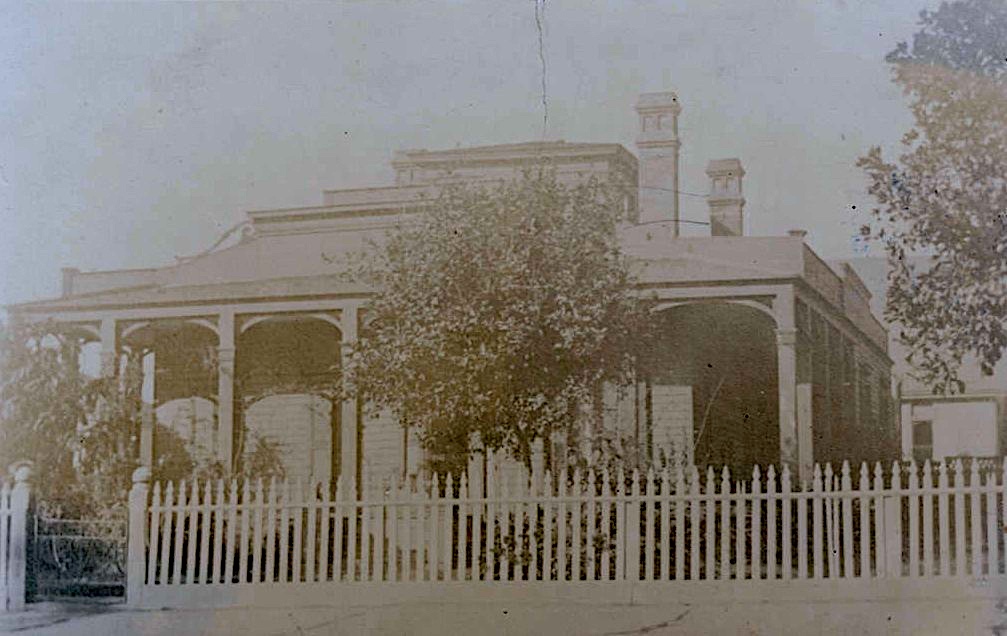
Throughout his adult life, Henry resided at 1221 Harrison Street, a home he occupied from before his election as mayor until his passing. He died on January 15, 1907

Wednesday, March 26, 2025

Daniel DeWitt.Tompkins Nestell (1819-1900): Civil War P.O.W & Notable Physician

Luty Family Plot and Daniel Nestell, M.D.

Plot 15, Lot 65 - Luty Family Plot

Daniel D. T. Nestell was born in New York between 1815 and 1819. He pursued a career in medicine, graduating in 1843 with honors from the University of the City of New York's University Medical College (later known as the New York University School of Medicine). Following his graduation, Nestell traveled abroad for two years to further his medical studies, accompanied by one of his professors, Dr. Valentine Mott.

Upon returning to the United States, Nestell worked as a physician or apothecary until 1862. On January 25, 1862, he was appointed Acting Assistant Surgeon on the U.S.S. Clifton, participating in several significant battles during the American Civil War, including the Battle of Forts Jackson and St. Phillip (the decisive battle for possession of New Orleans) and the Siege of Vicksburg. He was captured by Confederate forces at Sabine Pass, Texas, in September 1863 and held as a prisoner of war until January 1864.

U.S.S. Clifton during the Civil War

 
After his release, Nestell was assigned to the U.S.S. Alabama, where he served in the North Atlantic Blockading Squadron. During the Union attacks on Fort Fisher, he suffered irreversible hearing damage. His appointment as Acting Assistant Surgeon was revoked on June 6, 1865, and he was honorably discharged from the Navy in August of that year.

Nestell later received an appointment as Acting Assistant Surgeon in the U.S. Army on September 9, 1869, serving at Camp Warner, Oregon, until April 1871. He briefly served in California and the Arizona Territory before returning to civilian life in May 1872. Nestell then practiced medicine privately in California.

Daniel D. T. Nestell married Maria Louisa Whaites in 1864 and had a daughter named Ella. He passed away on October 24, 1900 and his cause of death was listed as "senility." He is buried in the Luty Family plot with no notable marker. The 1880 census shows him living with Frederick Luty, who is identified as his son-in-law.